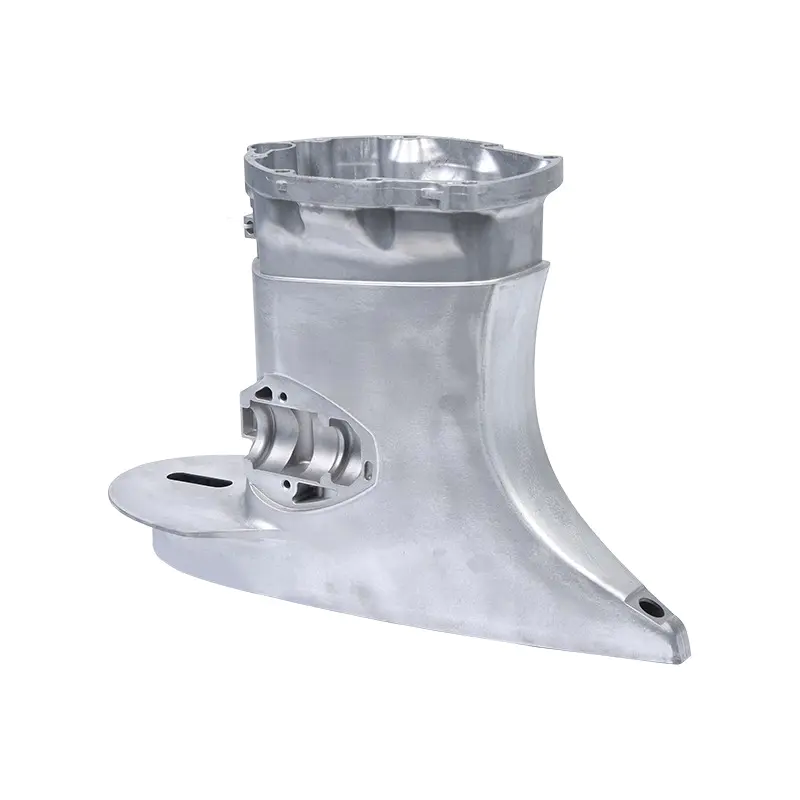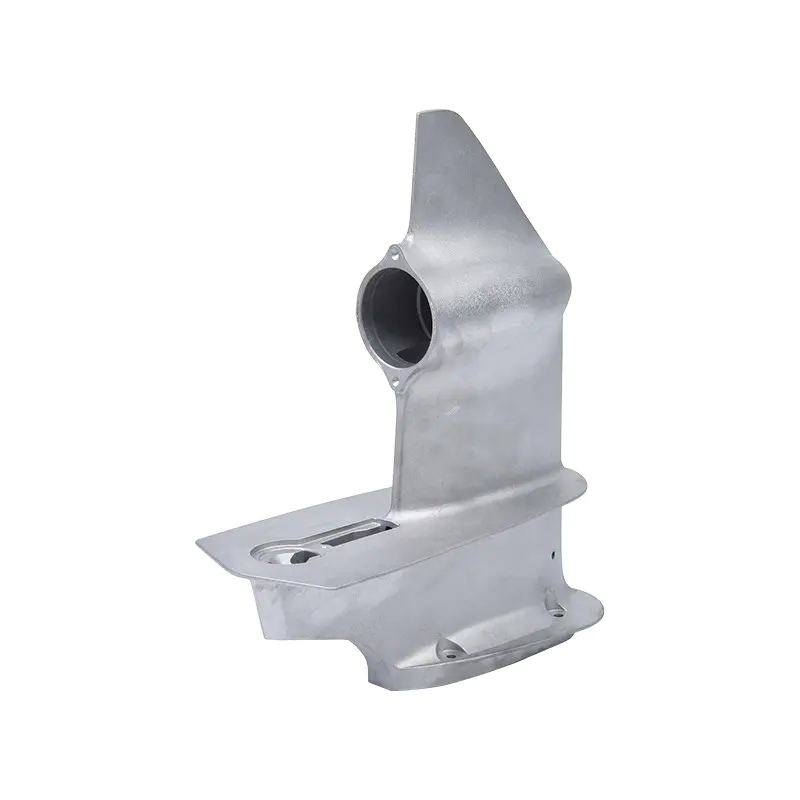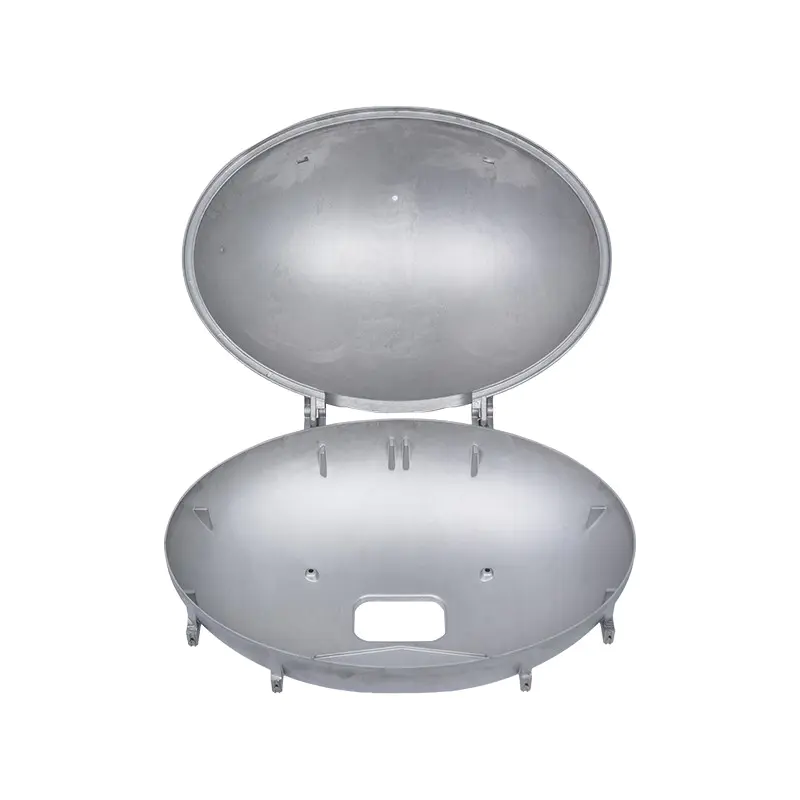
The Era of Lightweighting: A Perfect Synergy of Material and Process
In today’s industrial landscape, which prioritizes lightweighting, Aluminum Alloy High-Pressure Die Casting (HPDC) and Magnesium Alloy Semi-Solid Die Casting are two advanced forming technologies gaining significant attention. Their applications span diverse sectors, including automotive manufacturing, aerospace, and electronic communication equipment. But what are the differences between these two processes, and what considerations govern material selection? This article delves into these questions.
High-Pressure Die Casting: Balancing Efficiency and Strength
High-Pressure Die Casting (HPDC) is a casting process suited for large-scale production, renowned for its high efficiency, ability to manufacture complex thin-walled components, and excellent dimensional accuracy and surface finish.
For aluminum alloy HPDC, material selection is crucial. Research indicates that the performance of new aluminum-silicon alloys can be significantly enhanced through precise control of alloying elements.
For instance, a new Al-10Si-1.2Cu-0.7Mn aluminum alloy, by controlling iron content to as low as 0.15%, avoids the formation of large amounts of brittle intermetallic compounds, while adding about 0.7% manganese prevents die sticking.
This alloy exhibits excellent properties in the as-cast state: hardness can reach ~115±5 HV, yield strength ~200±10 MPa, ultimate tensile strength ~330±10 MPa, and elongation about 9%±1%.
This allows it to meet the demands of many applications without heat treatment, solving the challenge of needing correction after heat treatment for large, thin-walled die castings.
Recent research has also led to the development of high-strength, high-thermal-conductivity die-cast aluminum alloys. By adding trace elements like Cu, Mg, Zn, and Mn, the mechanical and thermal conductivity properties of the aluminum alloy are synergistically regulated.
Products from such alloys in the as-cast state achieve an ultimate tensile strength of >280MPa, yield strength >165MPa, elongation >7.3%, and thermal conductivity reaching 170-180 W/m·K—a 40% improvement over ordinary aluminum materials. This effectively addresses the traditional difficulty of balancing strength and plasticity in die-cast aluminum alloys.
Semi-Solid Die Casting: A Leap in Precision and Quality
Semi-solid die casting technology, particularly for magnesium alloys, is one of the most promising near-net-shape forming technologies of the 21st century. It combines the advantages of liquid casting forming and solid-state pressure processing, producing castings with minimal gas pores and shrinkage porosity.
For AZ91D magnesium alloy, research shows that preparing semi-solid slurry via the Self-Inoculation Method (SIM) results in a fine and uniform microstructure at the outlet of the flow guide, with an average grain size of about 36μm.
After rheo-die casting, the average grain size is 60-70μm, and the tensile strength and hardness of the castings reach 185MPa and HV30=67.88, respectively.
The advantages of semi-solid die casting include:
- Minimizing gas and shrinkage pores
- Preventing hot cracking
- Enhancing strength and ductility
- Achieving a fine-grained microstructure
- Suitability for producing high-quality, high-integrity castings
Material Factors: The Key to Determining Performance
Whether for aluminum or magnesium alloys, the material formulation plays a decisive role in the final product’s performance.
Aluminum Alloy Element Control
In aluminum alloy design, the addition ratio of silicon must be precisely controlled—it enhances the alloy’s castability while ensuring strength.
Iron content requires strict control as it forms brittle phases that degrade mechanical properties. Conversely, the trace addition of elements like copper, magnesium, and manganese can synergistically regulate the alloy’s mechanical properties and thermal conductivity.
Magnesium Alloy Process Control
For magnesium alloy semi-solid die casting, process parameters immensely impact the final product quality. Studies indicate that in the SIM process, the proper matching of processing temperature (650-680°C), inoculant addition amount (5-8%, mass fraction), and the flow guide inclination angle is crucial.
Only when these parameters are appropriately coordinated, bringing the outlet temperature close to the alloy’s liquidus temperature, can high-quality semi-solid slurry be obtained.
Application Prospects: Fields for Different Strengths
Aluminum Alloy HPDC, due to its high production efficiency, is particularly suitable for mass production of complex-shaped and thin-walled components. It is widely used in automotive engine parts, transmission components, electronic communication housings, and more.
Magnesium Alloy Semi-Solid Die Casting is more suited for parts requiring high integrity and quality, such as safety-critical automotive components and aerospace assemblies.
In practical production, research findings concerning the material design of high-strength, high-thermal-conductivity die-cast aluminum alloys and their manufacturing processes and equipment have been scaled up and utilized by several renowned companies.
Including Huawei, Ericsson, BYD, and Dongfeng Motor, the project has generated over 13 billion RMB in new output value in the past three years, fully demonstrating the market potential of this technology.
Material Selection: The Core Competitiveness in Lightweight Manufacturing
In the process selection between aluminum alloy HPDC and magnesium alloy semi-solid die casting, matching material characteristics with process advantages remains the key to project success. Whether your priority leans towards high efficiency and complex shaping, or you pursue higher part integrity and mechanical performance, the correct combination of process and material directly impacts the final product’s outcome.
All Casting Needs Met With JinYao
Interested in deepening your exploration of light alloy casting technology? We welcome you to stay tuned to our technical BLOG column! We will regularly share more professional analysis on materials science, process innovation, and industry trends, helping you maintain a forward-looking perspective in the field of lightweight manufacturing.
ntegrity and quality, such as safety-critical automotive components and aerospace assemblies.
In practical production, research findings concerning the material design of high-strength, high-thermal-conductivity die-cast aluminum alloys and their manufacturing processes and equipment have been scaled up and utilized by several renowned companies.
Including Huawei, Ericsson, BYD, and Dongfeng Motor, the project has generated over 13 billion RMB in new output value in the past three years, fully demonstrating the market potential of this technology.
Material Selection: The Core Competitiveness in Lightweight Manufacturing
In the process selection between aluminum alloy HPDC and magnesium alloy semi-solid die casting, matching material characteristics with process advantages remains the key to project success. Whether your priority leans towards high efficiency and complex shaping, or you pursue higher part integrity and mechanical performance, the correct combination of process and material directly impacts the final product’s outcome.
All Casting Needs Met With JinYao
Interested in deepening your exploration of light alloy casting technology? We welcome you to stay tuned to our technical BLOG column! We will regularly share more professional analysis on materials science, process innovation, and industry trends, helping you maintain a forward-looking perspective in the field of lightweight manufacturing.